

Review bills, usage patterns and expected additions such as an EV or heat pump before sizing the system.
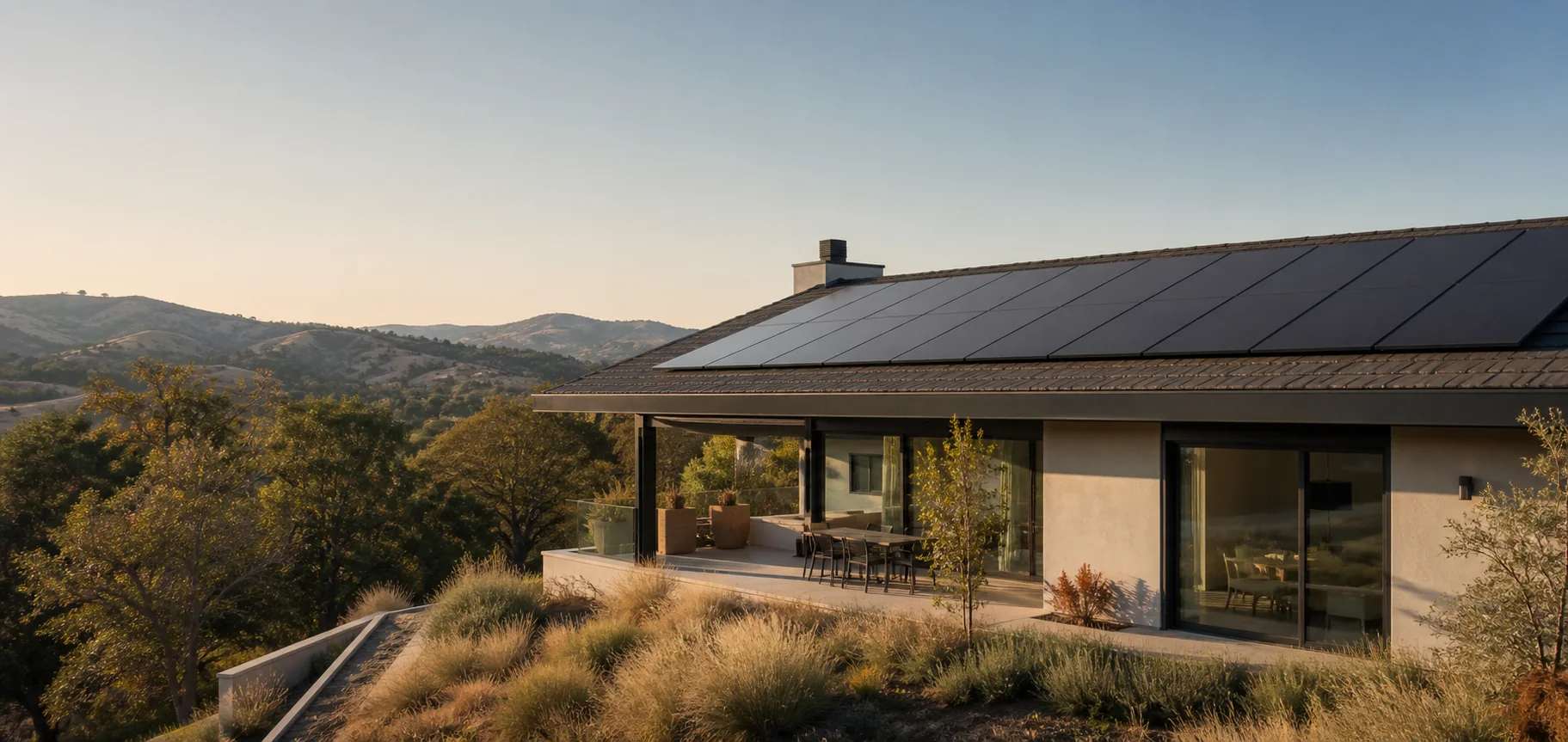
Solar + battery
Design for the home you actually run.
Usage, backup priorities and the property come first. Equipment follows the goal.
Concept visual created for this preview.
A better proposal starts before equipment selection.
The system should follow the home, the energy pattern and the outcome the homeowner wants.
Inspect the roof, shade, service panel and equipment-location constraints.

Separate bill reduction, outage backup and resilience priorities.
Document production, rate, degradation, financing and tax assumptions.
Solar detail is a concept visual.
Compare the whole decision.
Price matters. It is not the only line that determines whether a system fits.
System size and expected annual output
Compare assumptions, degradation and the basis for the production estimate.
Capacity, operating mode and backup coverage
Know what the battery is expected to power and how it will operate day to day.
Import and export assumptions
Use the current tariff and explain how energy timing affects the recommendation.
Price, financing, warranties and service
Separate cash and financed cost, dealer fees, included work, exclusions and long-term ownership.
Use today's California inputs.
Export value and import cost are not the same.
The Solar Billing Plan changes how exported energy can be valued, which makes usage timing and battery operation important inputs.
Final modeling should use the customer's utility, current tariff and current tax guidance. Tax outcomes require a qualified adviser.
See what fits your home.
Start with usage, property and backup priorities. Get a direct conversation before a detailed intake.